Solar-only exit (grid-tied) — If Step 1 pointed solar-only and the financial check below still says no battery, that is a valid outcome. Note solar-only, no battery on your checklist. You can skip Step 9 — How to price a solar system for now and continue straight to Step 10 — Design and proposal review, or price the job first if the client needs a quote before the proposal walkthrough.
What does a battery give you?
On a grid-tied site, a battery is optional — but most buyers want it for one or both of two reasons. Knowing which matters to you shapes how many kWh you need later in this step.
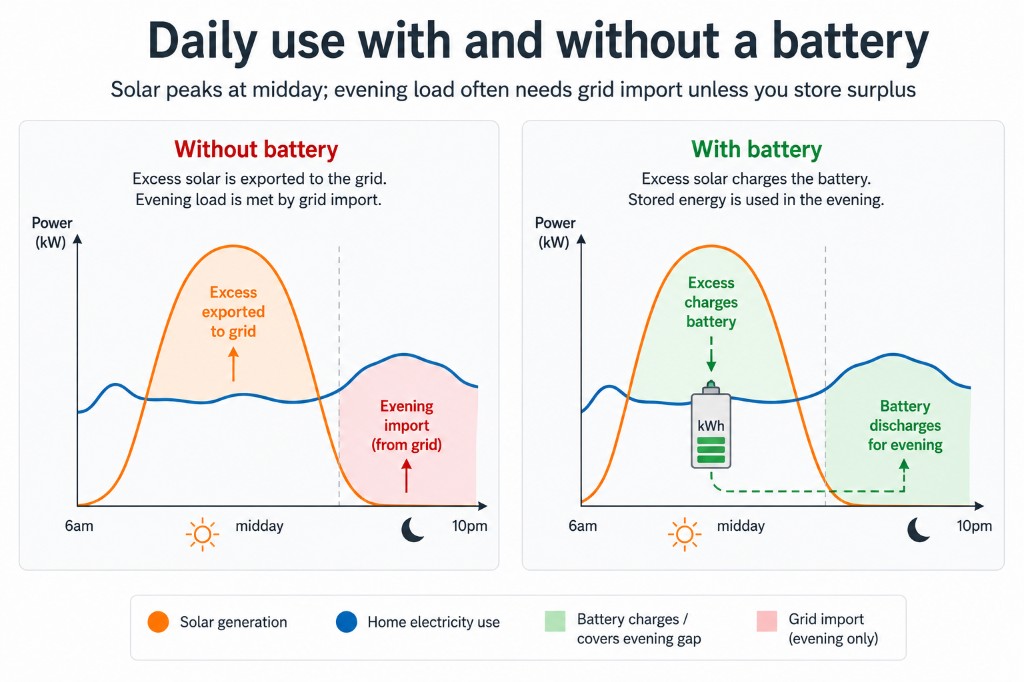
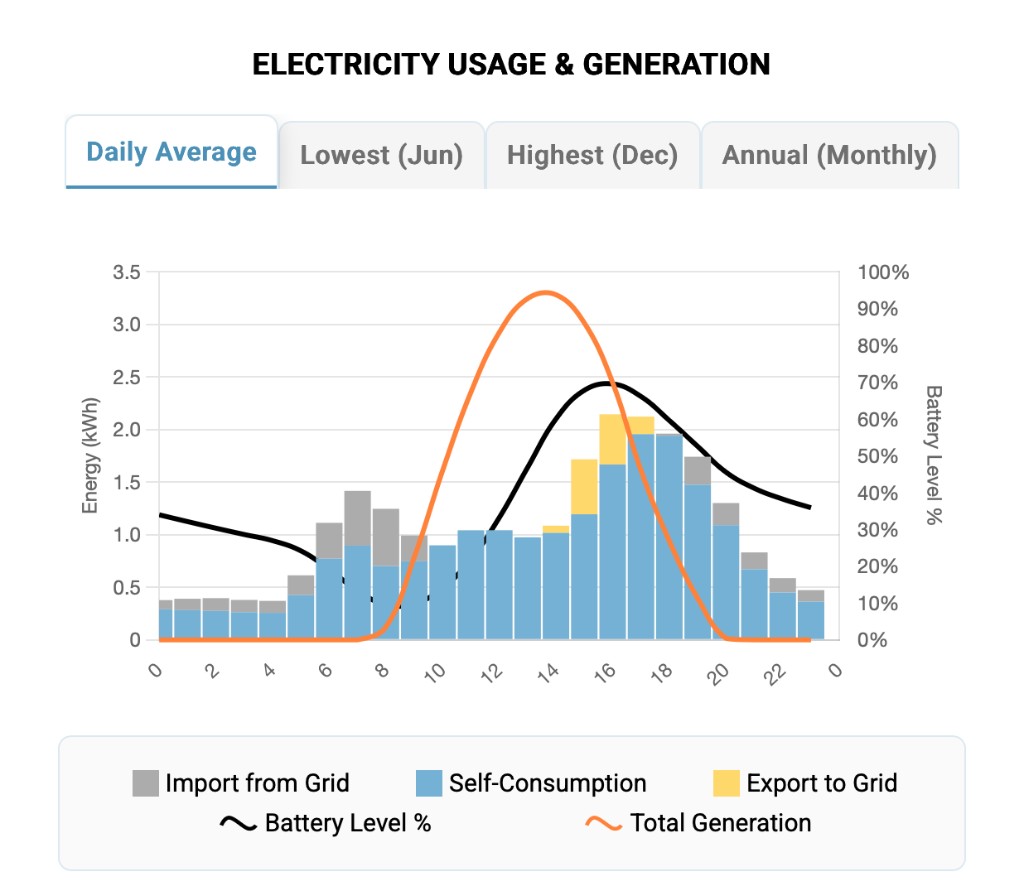
Independence from the grid. Solar peaks at midday; many homes use most power in the morning and evening. A battery stores midday surplus so you can use it later in the evening, avoiding expensive peak rates. Even when the grid is up, that means running more of the home on your own generation instead of buying expensive grid power. The quiz below includes a self-sufficiency question if maximising on-site share is your main goal.
Backup when the grid goes down. Standard grid-tied solar shuts off in a blackout unless the system is designed for backup. A battery with backup capability can keep chosen circuits alive — worth weighing if you have:
- Frequent outages — unreliable local supply or regular maintenance shutoffs.
- Critical circuits — fridge and freezer, communications, home medical equipment, sump pump, or a home office you cannot afford to lose mid-meeting.
- Extreme weather risk — cyclones, bushfires, ice storms, or heatwaves that knock out the grid for hours or days.
Backup is the hardest goal to size: a few hours on essentials is a very different battery from whole-home cover through a multi-day outage. If independence is your main driver, the money question is tariffs and battery cost in the section below. If backup matters, ask how much runtime you actually want — then whether the cost is justified. Many buyers want both; that usually means a larger battery.
Is a battery worth it? (grid-tied)
Back in Step 1, the battery question was only a rough steer. Now you know how much power you use (Step 3), how big the array is (Step 4), and what inverter you are planning (Step 6) — so you can run the numbers properly.
For most grid-tied homes, the financial case comes down to import vs export rates and what the battery costs. Load shape still matters — see the diagram below — but tariffs and battery price usually settle whether storage pays off on savings alone. Photonik Pro runs the full calculation on your sized design; the quiz below is a quick check on the same logic.
Reasonable export rates? If the grid pays fairly for surplus solar, you may not need a battery for savings at all — solar-only is often the better financial choice. Consider storage only if independence, backup, or both from the section above matter to you.
Export rates close to zero? Selling surplus solar earns almost nothing, while buying back in the evening is expensive. In that case, look hard at battery price — storage is more likely to pay off on bills alone, and falling battery costs are strengthening the case over time.
What tariffs make a battery pay off?
Evening use only matters if storing solar is worth more than exporting it. That depends on two numbers: your import price (what you pay to buy from the grid) and your export or feed-in rate (what you earn selling surplus). Our solar savings by country table compares both scenarios side by side — toggle solar-only vs solar + battery to see how rankings change with tariffs and sunshine.
Rule of thumb: when export is a small fraction of import, a battery earns its keep by avoiding expensive imports. When export is a large fraction of import (often around a third or more), surplus solar already has decent value on the grid and a battery is harder to justify on savings alone.
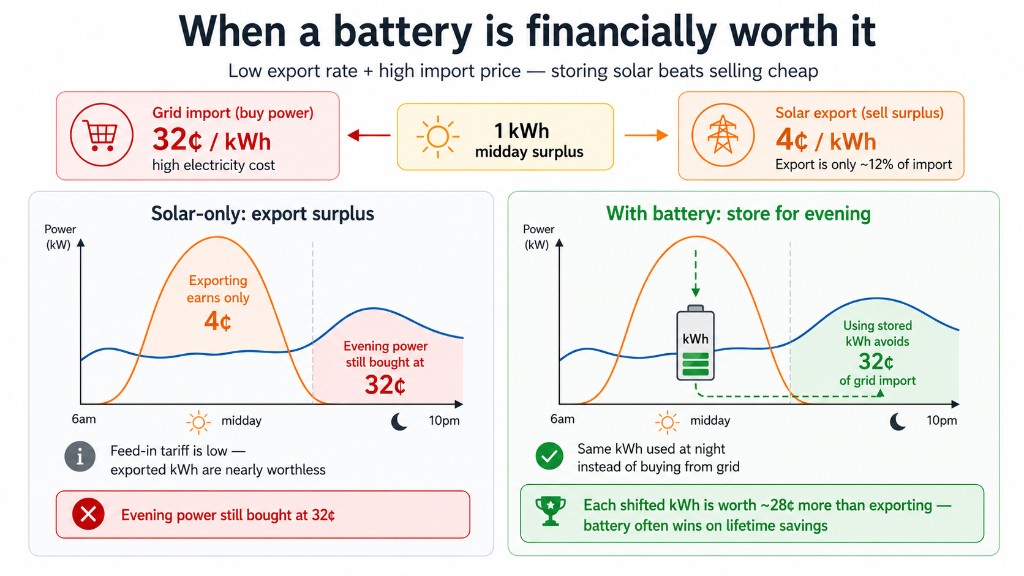
Example — battery favourable: import 32¢/kWh, export 4¢/kWh (export is only ~12% of import). Each kWh shifted from export to evening use is worth far more than the feed-in credit. This pattern is common where retail power is expensive and export payments are low.
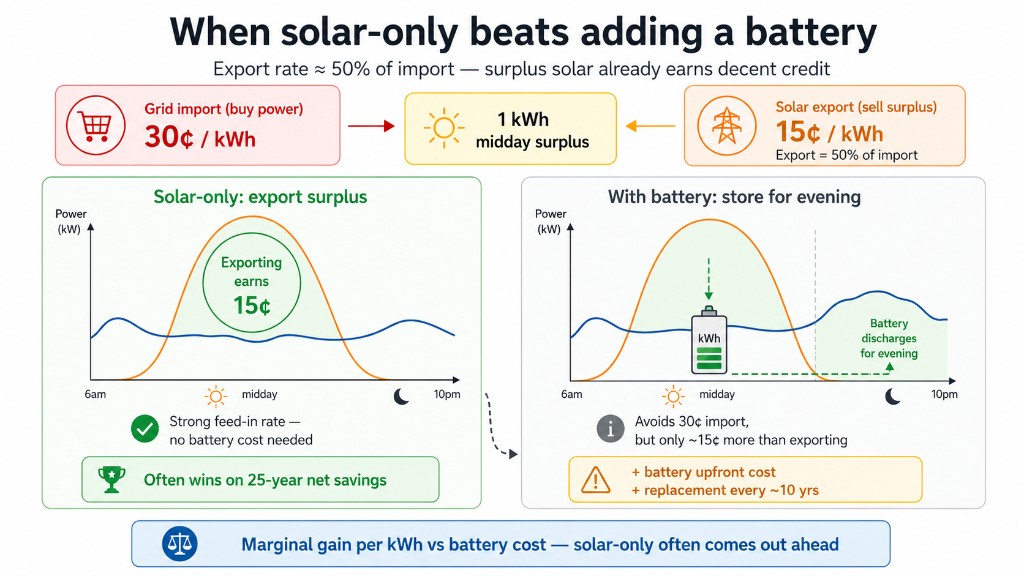
Example — solar-only favourable: import 30¢/kWh, export 15¢/kWh (export = 50% of import). Storing a kWh avoids 30¢ of import, but exporting already earned 15¢ — the extra benefit per shifted kWh is modest next to battery upfront cost and replacement. Check your country on solar savings by country before assuming storage pays off.
How to think about kWh (grid-tied)
Do not default to maximum kWh. Size to:
- Evening load you want to cover from stored solar.
- Backup circuits you care about during outages (fridge, comms, lights — not necessarily the whole house).
- Budget and payback tolerance — larger batteries cost more and may not pay back faster.
Compare chemistries and modular racks in battery directories. For a quick public cross-check, try the solar and battery sizing calculator or the sizing calculator walkthrough.
AC vs DC coupling
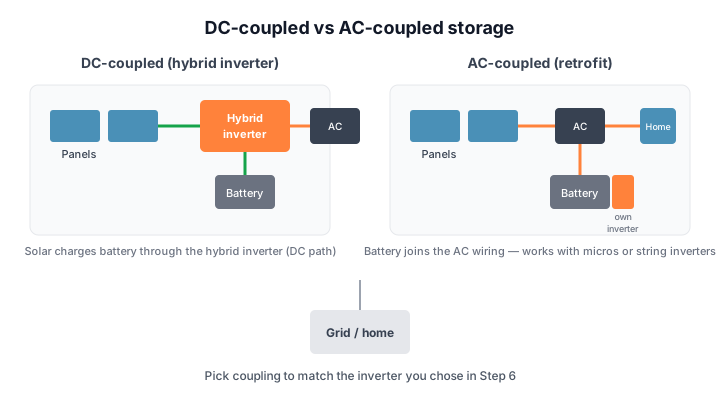
How the battery connects depends on the inverter you chose in Step 6:
- DC-coupled (hybrid inverter) — panels, battery, and grid interface share one inverter platform. Efficient charging from solar; common on new hybrid installs. See Step 6 — hybrid inverters.
- AC-coupled — battery has its own inverter and joins the AC wiring. Flexible for retrofits (including microinverter systems). Small efficiency loss vs DC. See Step 6 on micros + batteries.
Retrofit context: forum: adding a battery to existing solar.
Off-grid sizing
If Step 1 was off-grid, storage is mandatory — the question is how much, not whether to buy.
- Autonomy days — how many cloudy days you can cover without generator input.
- Depth of discharge — lithium allows deeper daily cycling than lead-acid; nameplate kWh is not all usable.
- Inverter surge — motor starts (pumps, fridges) need short power peaks; size the inverter and battery BMS for peak loads from your Step 1 load table.
Cross-check the load table from Step 1 and daily use from Step 3. Deep methodology: CER: battery sizing.
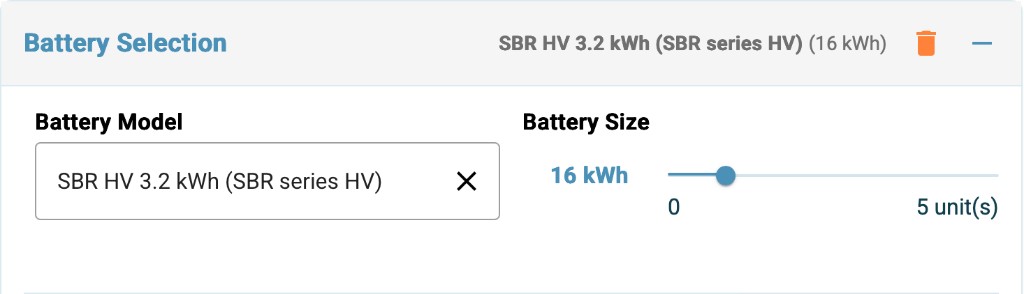
In Photonik Pro, open System Design → Battery Selection. Pick model and size with the slider — modular racks add units until you hit the kWh you want.
Once a battery is in the design, the Electricity Usage & Generation chart shows how storage shifts midday surplus into evening use — watch the battery level line and the drop in grid import after dark.
Without Pro, try the solar and battery sizing calculator or the sizing calculator walkthrough for a lighter cross-check.