Three inverter choices for grid-connected solar
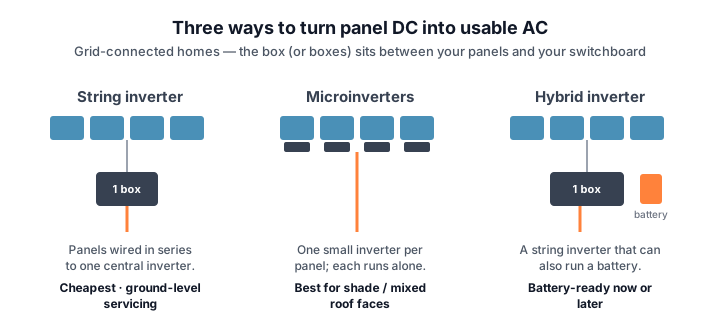
- String inverter — one central box. Your panels are wired in series into it. It is the cheapest, most proven option, sits at ground level for easy servicing, and suits simple roofs with little shade on one or two orientations.
- Microinverters — a small inverter under each panel, so every panel works on its own. They handle shade and mixed roof faces well and give you panel-by-panel monitoring, but there are many more units, and they live up on the roof.
- Hybrid inverter — a string inverter that can also charge and run a battery. You can start solar-only and add a battery later without replacing the inverter.
(Power optimisers are a fourth option: small boxes under each panel like micros, but they still feed one central inverter. They give panel-level tuning while keeping ground-level servicing of the main box — but they add roof electronics and keep the central inverter.)
String vs microinverters: shade and mixed roof faces
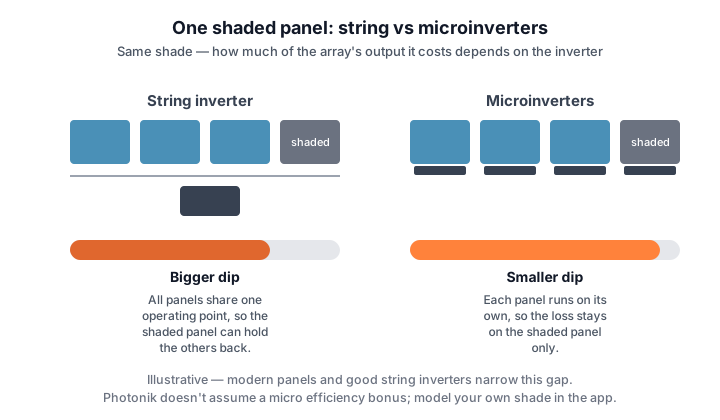
- The old warning that “one shaded panel drags the whole string down” is less true today. Modern panels have built-in bypass diodes, and good string inverters actively hunt for the best operating point under shade — so the penalty is much smaller than it used to be.
- But shade still costs energy, and patchy or moving shade (a branch, a vent pipe, a chimney) is handled better panel-by-panel. Microinverters keep the loss to the shaded panel; a string shares one operating point across all its panels.
- Mixed orientations: if panels sit on two or more roof faces, microinverters (or a string inverter with multiple MPPT inputs) let each face do its best rather than being averaged together.
- Reality check: on a simple roof, one orientation, little shade, a good modern string inverter comes within a few percent of microinverters — for less money. Micros mainly earn their premium on genuinely shaded or multi-face roofs.
A note on our numbers: Photonik Pro does not assume microinverters are more efficient — it models the same generation either way. The quiz below is where you can weigh the shade recovery micros offer against their higher cost, and see how rarely that extra cost pays for itself over 25 years on a simple roof.
Do more units mean more failures?
A fair concern. Microinverters put many more pieces of electronics on the roof, in the heat, where a failure means someone has to get on the roof to swap a unit. So there are more things that can eventually fail, and they are harder to reach. But two things balance that: quality microinverters are genuinely reliable (leading brands quote very low failure rates and back them with 25-year warranties, matching the panels), and when one does fail you lose just that one panel — not the whole system. A string inverter is a single point of failure (if it dies, everything stops), but it sits at ground level, is cheap to reach, and is typically replaced once over a 25-year life anyway. Neither is clearly “more reliable” — it comes down to brand quality, your climate, and roof access.
Hybrid inverters: worth it if you might add a battery?
A hybrid is a string inverter with battery charging built in. The appeal is future-proofing: run solar-only now, add a battery later, and you don't have to replace or add an inverter to do it.
- Pros: battery-ready in one box; no second inverter and no inverter swap when you add storage; most hybrids can also keep power on during a blackout (with the right battery).
- Cons: costs more upfront than a plain string inverter — money spent on a feature you may not use for years; it can tie you to certain battery brands or types (especially where the battery connects directly to the hybrid); and the battery features may be dated, or out of warranty, by the time you actually add storage.
Rule of thumb: a hybrid makes sense if a battery is likely within the next few years. If a battery is unlikely or a long way off, a plain string inverter now — adding a battery later using AC coupling (below) — is often cheaper and keeps your options open.
Can you add a battery to microinverters?
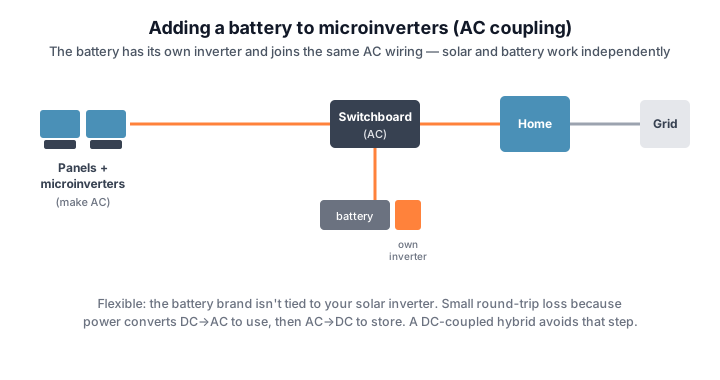
- Yes — through AC coupling. Microinverters already make AC, and the battery brings its own inverter, so it simply joins the same AC wiring. Solar and battery then work independently.
- This is flexible: the battery brand isn't locked to your solar inverter, so you can shop around when the time comes.
- The trade-off is a small round-trip efficiency loss: to store solar, power converts DC→AC (at the panel) then AC→DC (into the battery), and back again to use it. A DC-coupled hybrid avoids one of those steps, but at the cost of the flexibility above.
- The same applies to almost any solar-only system: whatever inverter you chose, you can usually add an AC-coupled battery later.
Photonik Walkthrough
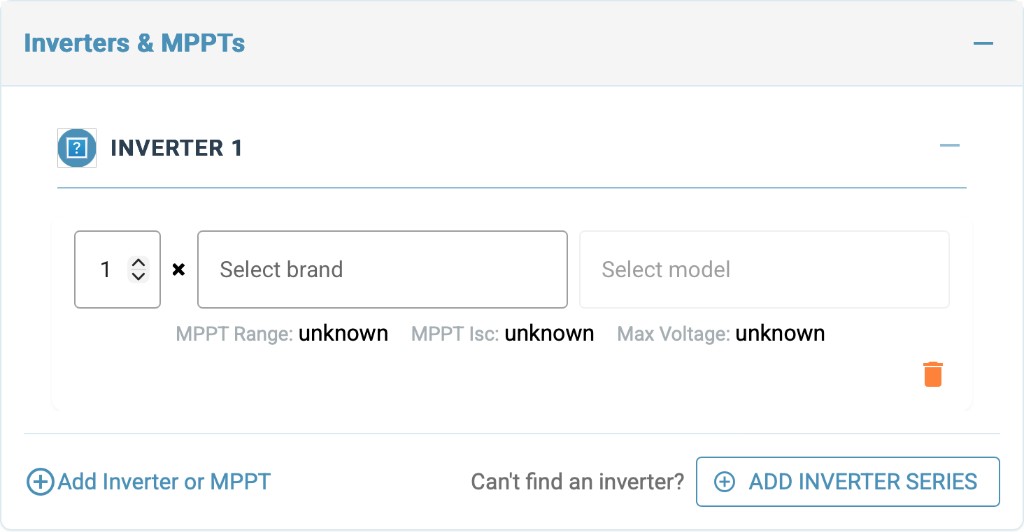
In Photonik Pro, open System Design → Inverters & MPPTs. Add inverters and MPPT inputs, pick brand and model from the library, and read MPPT range and max voltage before you wire strings in Step 7. If your inverter is not in the list, click Add inverter series.
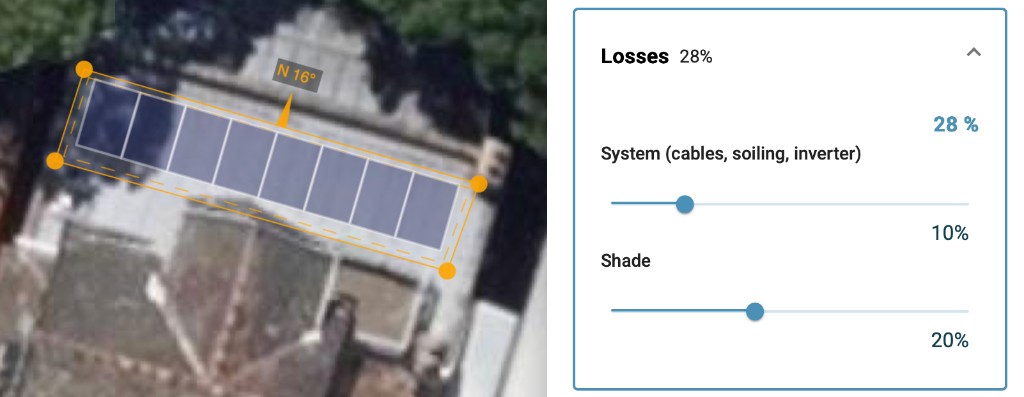
In Panel Placement, you can also enter a shade loss % for each panel group. Photonik does not calculate shade for you — work out the loss elsewhere (site visit, shade tool, or installer judgement) and type the figure in here.
Compare models in the inverter directory and spec sheets. Battery sizing and payback are their own topic — that’s Step 8 — Battery storage. Next, Step 7 — Strings and electrical match checks your panels fit the inverter electrically.